
History Canicattì
Origin of the name
The toponym is probably of Arabic origin, but the exact etymology is debated. In Idrisi there appears a term in Arabic ?, al-qaṭṭa, “stone cutter”, but it is uncertain whether it refers to the present-day city; the Latin form Candicattinum presupposes the phrase in Arabic خندق الطين?, ḫandaq aṭ-ṭīn, “mud ditch”.
Soria
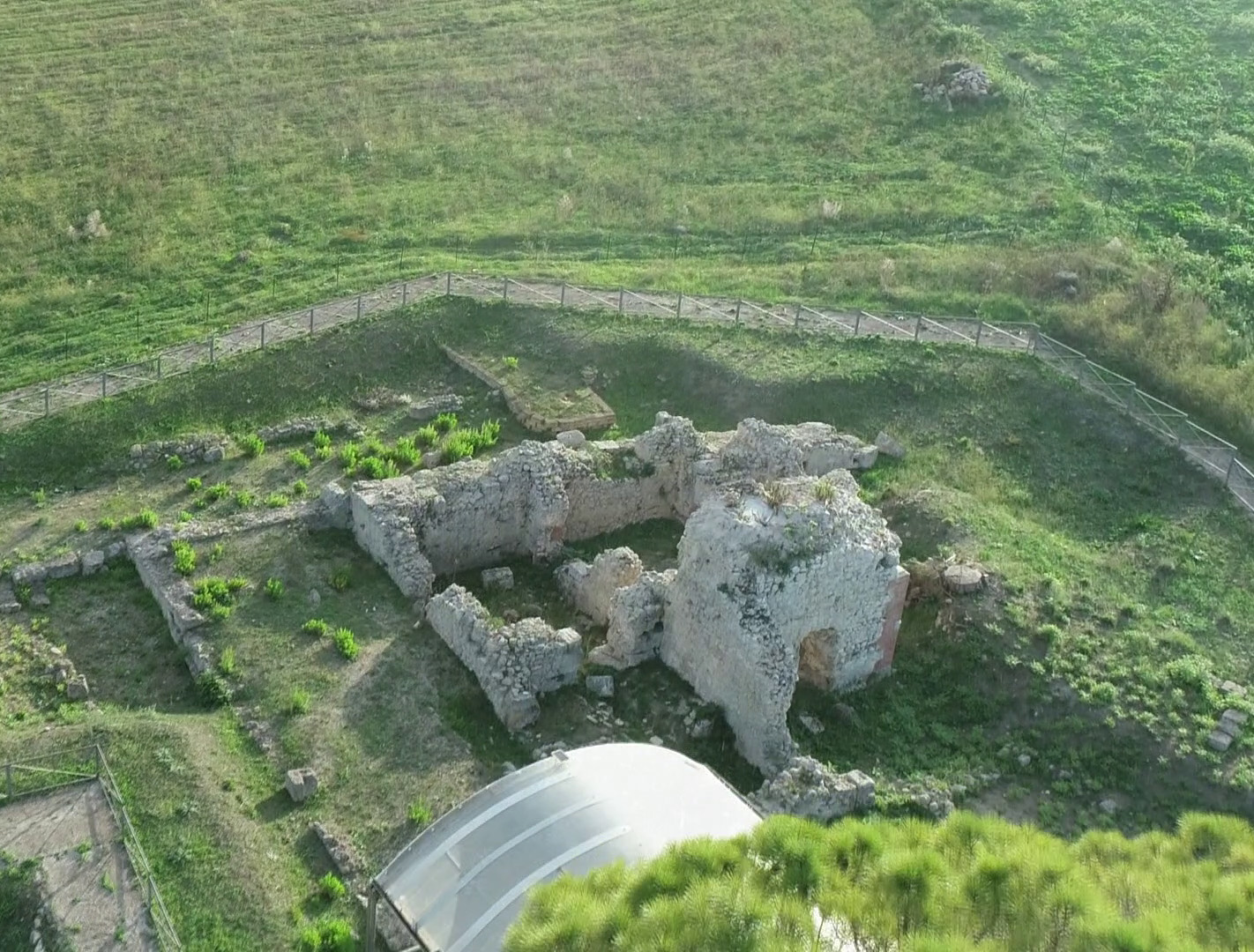
The archaeological remains found in the city and in the surrounding areas testify to the existence of a settlement already in pre-Roman times.
After the Norman conquest of Sicily, the lord of the place, probably the Emir Melciabile Mulè, was besieged and defeated by the baron Salvatore Palmeri (1087), who was following Count Ruggero and who as a reward offered him the sword and the dominion of the fief. Under the Palmeri lordship, the Arab fortress was expanded and took on the appearance of a real castle with a tower.
The Normans were succeeded by the French, who were then driven out by the Aragonese. In 1448 the fief of Canicattì was ceded by Antonio Palmeri, who had no children, to his nephew Andrea De Crescenzio. The latter obtained from King John II of Aragon the Licentia populandi, that is, the right to expand the boundaries of the fief, to increase the number of inhabitants and to administer justice. Under De Crescenzio, Canicattì was a rural community that had between one thousand and one thousand five hundred inhabitants, settled in the upper part of the city. Andrea was succeeded by his son Giovanni, who, having no male children, left the barony to his son-in-law Francesco Calogero Bonanno, in 1507.
With the Bonanno family, the city experienced a considerable demographic increase; the feudal lords, first barons, then dukes and finally princes of Cattolica, built splendid buildings and fountains. The lordship of the Bonanno family lasted until the end of the eighteenth century, but towards the end of the century it began to decline; feudal society was on the verge of disappearing. The last of the Bonanno family, in 1819, ceded the lordship of Canicattì to Baron Gabriele Chiaramonte Bordonaro.
After the uprisings and revolutions of 1848 and 1859/61, once the unification of Italy was achieved, banks, mills and factories arose in Canicattì, which increased trade. Throughout the twentieth century, the city’s economy was based fundamentally on agriculture (especially table grapes), trade and the tertiary sector.